

Giving children the tools they need to build a secure financial future — starting today.
Money touches every part of our lives. We earn it, spend it, save it, and sometimes worry about it. Yet despite how central money is to daily life, most schools spend little to no time teaching children how it actually works. The result? Millions of adults enter the workforce without knowing how to balance a budget, understand a paycheck, or avoid high-interest debt.
The good news is that financial literacy — the ability to understand and manage money wisely — doesn’t have to wait until adulthood. In fact, the earlier children learn these skills, the better prepared they’ll be to make sound decisions throughout their lives.
This blog post explores what financial literacy for kids really means, why it matters, and how parents and educators can teach it in ways that are fun, age-appropriate, and genuinely effective.
What Is Financial Literacy?
Financial literacy is the foundation of smart money management. It refers to understanding the basic concepts and skills needed to handle money responsibly. For adults, this might include knowing how to file taxes, invest in a retirement account, or read a mortgage statement.
For kids, it starts much simpler — learning the difference between a want and a need, understanding that money is earned through work, and discovering that saving a little over time can lead to something bigger.
At its core, financial literacy for children covers five key areas:
Earning — Where does money come from? Kids learn that money is exchanged for work, goods, or services, and that earning requires effort and responsibility.
Spending — How do we make purchasing decisions? This involves understanding value, comparing prices, and distinguishing between things we need and things we simply want.
Saving — Why is it important to set money aside? Saving teaches patience, goal-setting, and the concept that delayed gratification often leads to greater rewards.
Giving — How can money benefit others? Charitable giving helps children develop empathy and understand money’s broader role in society.
Budgeting — How do we plan our money? Even basic budgeting teaches kids to allocate resources intentionally rather than spending impulsively.
Why Financial Literacy Matters for Kids
According to research from Cambridge University, money habits in children are largely formed by age seven. That’s not to say change is impossible after that — it absolutely is — but it does underscore how powerful early financial education can be. The values and behaviors children develop around money in their formative years tend to carry forward into adulthood.
Without financial education, children grow into adults who may:
Spend more than they earn and fall into debt
Struggle to build an emergency fund or retirement savings
Be vulnerable to predatory financial products and scams
Feel anxious or confused when faced with major financial decisions
On the other hand, children who learn financial skills early tend to grow into adults who budget effectively, save consistently, understand the basics of investing, and approach financial decisions with confidence rather than fear.
Financial literacy also teaches life skills that go far beyond money. When a child learns to save up for a toy they want, they’re practicing delayed gratification. When they track their allowance in a notebook, they’re developing organizational skills. When they decide how much to donate to a cause they care about, they’re exercising empathy and values-based decision-making. These are the building blocks of responsible, thoughtful adulthood.
Age-by-Age Financial Lessons
One of the most important principles of teaching kids about money is meeting them where they are developmentally. A six-year-old and a fourteen-year-old can both learn financial literacy — but the concepts, tools, and conversations need to look very different.
Ages 3–5: Introducing the Concept of Money
Very young children can begin to understand that money is used to buy things. At this stage, the goal isn’t complexity — it’s familiarity.
Use a clear piggy bank so they can see their savings grow
Let them hand money to the cashier at the store
Play pretend “store” at home using toy coins or real small change
Introduce the idea that people work to earn money
Ages 6–8: Needs vs. Wants and the Power of Saving
Elementary-age children are ready to start making simple money decisions. This is a great time to introduce an allowance — even a small one — so they can practice managing their own money.
Talk about the difference between things we need (food, shelter, clothing) and things we want (toys, treats, video games)
Help them set a savings goal for something they want to buy
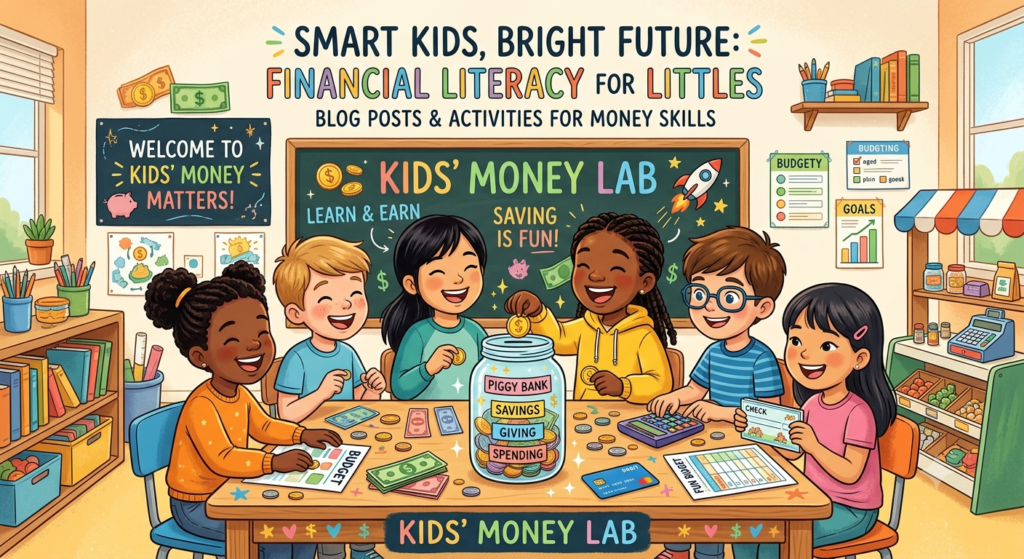
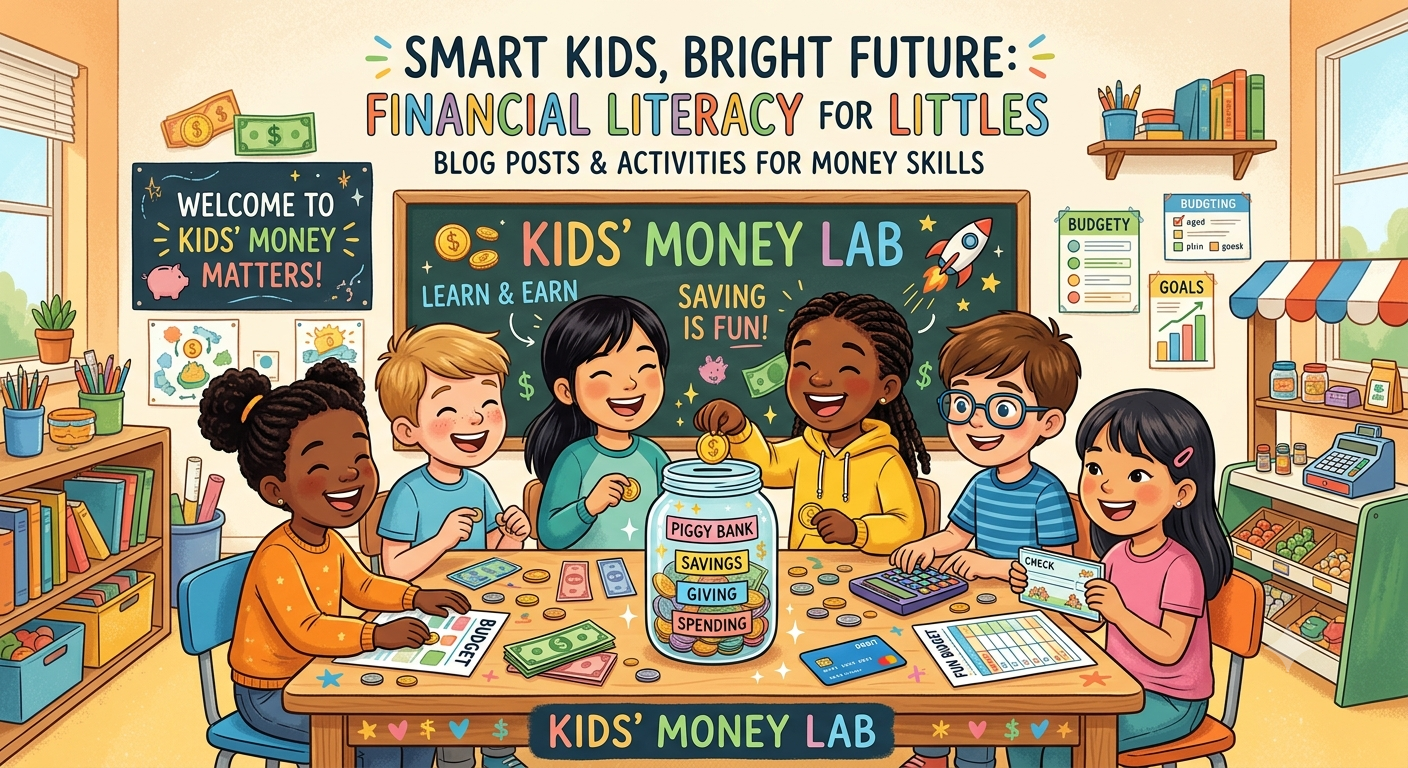
Use three jars labeled “Spend,” “Save,” and “Give” to divide their allowance
Start comparing prices at the grocery store and explaining why some choices are better value
Ages 9–12: Budgeting and Goal-Setting
Tweens are ready for more structured financial thinking. At this stage, children can handle simple budgets, understand the concept of interest (in very basic terms), and begin to think longer-term.
Create a simple monthly budget together for their allowance or earned money
Open a savings account at a bank or credit union in their name
Discuss the concept of earning interest — “the bank pays you a little extra for keeping your money there”
Introduce the idea of working for extra money through chores or small jobs for neighbors
Ages 13–17: Real-World Money Skills
Teenagers are approaching financial independence and need practical, real-world skills.
Many are earning their first income through part-time jobs, babysitting, or freelance work.
Teach them how to read a pay stub and understand deductions
Discuss the basics of taxes — what they are and why we pay them
Introduce credit cards: how they work, the danger of carrying a balance, and what interest means in practical terms
Talk about financial goals: college, a car, travel — and how to save toward them
Explore the basics of investing, compound interest, and why starting early matters enormously
Practical Tips for Parents
You don’t need to be a financial expert to teach your kids about money. In fact, some of the most powerful financial lessons come from everyday moments rather than formal lectures.
Make it visible. Young children learn best when they can see and touch. Use physical cash, jars, or visual savings charts rather than abstract numbers on a screen.
Involve them in real decisions. When grocery shopping, explain why you choose one brand over another. When paying a bill, explain what it’s for. These casual moments teach enormous amounts.
Allow mistakes with low stakes. If your child blows their allowance on something they regret, resist the urge to bail them out immediately. The mild disappointment of a small financial mistake now is far less painful than the consequences of a major one in adulthood.
Talk openly about money. Many families treat money as a taboo topic. But children who grow up in homes where finances are discussed honestly — without anxiety or shame — develop healthier money relationships.
Model good habits. Children watch everything. If they see you budgeting, saving, and making thoughtful spending decisions, those behaviors become normalized. Similarly, if they hear constant stress and arguments about money, that anxiety can transfer to them.
Celebrate milestones. When your child reaches a savings goal, acknowledge it. Positive reinforcement builds the motivation to keep going.
Tools and Resources for Teaching Financial Literacy
There are wonderful tools available today that make financial education engaging for children of all ages.
For younger children:
Zogo — a free app that teaches financial concepts through trivia-style games.
Sesame Street and other educational shows with money-themed episodes.
Picture books like Alexander and the Terrible, Horrible, No Good, Very Bad Day (which touches on spending and consequences) or The Berenstain Bears’ Trouble with Money
For tweens and teens:
Greenlight — a debit card and app designed specifically for kids and teens, with built-in budgeting tools and parental controls.
Khan Academy — offers free, age-appropriate lessons on personal finance.
NGPF (Next Gen Personal Finance) — a curriculum-based platform used by many schools, also freely accessible to families.
For families:
Regular family money meetings where everyone discusses household financial goals.
A shared savings goal — like a family vacation — where kids can contribute and track progress
The Role of Schools
While parents are children’s first and most influential financial teachers, schools have an important role to play too. Many states have begun introducing personal finance requirements into high school curricula, but coverage remains inconsistent and often insufficient.
Advocates for financial education argue that personal finance should be a standalone required subject — not an optional elective or a single unit buried inside a math class. Real financial literacy takes time, practice, and repetition. Students who complete dedicated personal finance coursework are more likely to save regularly, less likely to carry high-interest debt, and better equipped to plan for retirement.
If your child’s school doesn’t offer strong financial education, advocate for it. In the meantime, supplement at home using the strategies and resources outlined above.
Final Thoughts: The Gift of Financial Confidence
Teaching children about money is one of the most enduring gifts a parent or educator can give. When a child understands how money works, they grow up with confidence rather than confusion when facing financial decisions. They can negotiate a salary, avoid predatory loans, start saving early for retirement, and build the life they want with intention.
Financial literacy isn’t about making children obsessed with money. It’s about giving them the tools to use money as a resource — to support their goals, care for their families, contribute to their communities, and live with less financial stress.
Start where you are. Start with what you have. Even the simplest conversations about coins, choices, and saving can plant seeds that grow into a lifetime of financial wisdom.
The best time to teach your child about money is today — and the second best time is tomorrow. Either way, it’s never too early or too late to start the conversation.