


How Multitasking Can Actually Hurt Your Productivity (And What You Can Do Instead)
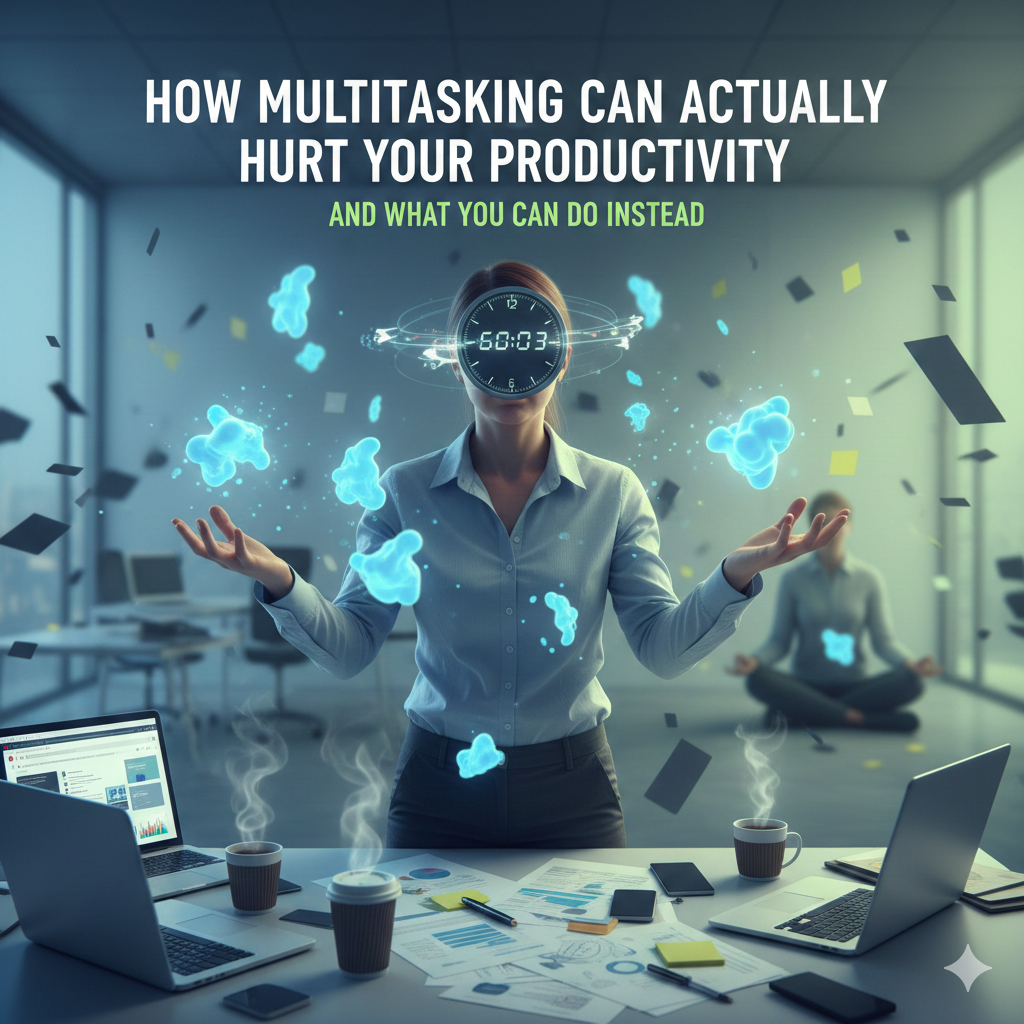
We often think multitasking is a sign of being productive — like replying to messages while watching a video, flipping between tabs while working, or checking notifications in the middle of a project. But the truth is, multitasking is one of the biggest productivity traps in our digital world.
If you find yourself feeling busy but not really getting anything done, multitasking might be the culprit.
Let’s dive into how multitasking impacts your brain and explore some smarter ways to work.
What Multitasking Really Does to Your Brain
Your brain isn’t built to juggle multiple thinking tasks at the same time. What we refer to as multitasking is really just rapid task-switching, and it comes with some serious downsides.
Every time you switch tasks: – You lose focus – Your mental fatigue increases – Your performance slows down – Your accuracy takes a hit. Your brain needs time to regain focus, and multitasking robs you of that time over and over again.
How Multitasking Reduces Productivity
1. It Drains Your Mental Energy:
Constantly switching gears zaps your cognitive energy faster than if you were working on a single task. You might feel worn out even when the tasks aren’t physically demanding.
2. It Diminishes Work Quality:
When your attention is divided: – Mistakes become more common – Creativity takes a nosedive – Important details slip through the cracks.
Focusing on one task at a time leads to better results in less time.
3. It Slows You Down:
Multitasking might give the illusion of speed, but research shows that it actually takes longer to finish tasks when you’re constantly switching between them.
4. It Trains Your Brain to Get Distracted:
The more you multitask, the tougher it gets to concentrate on a single task. Your attention span shrinks, making it harder to engage in deep work.
5. It Raises Stress and Anxiety Levels
Juggling multiple tasks sends a message to your brain that everything is urgent. This creates ongoing pressure and makes it difficult to find mental peace.
What to Do Instead: Embrace Single-Tasking
1. Try Monotasking:
Focus on one task at a time until you finish it or reach a natural stopping point.
This approach enhances: – Speed – Quality – Clarity – Satisfaction.
2. Use Time Blocks:
Try working in focused bursts like: 25–30 minutes (Pomodoro technique) 45–60 minutes for deep focus sessions .
Make sure to eliminate distractions during these focus periods.
3. Eliminate Digital Interruptions:
Before diving into a task, take a moment to: silence your notifications, close any tabs you don’t need, keep your phone out of reach, turn on Focus Mode Guard your attention fiercely.
4. Batch Similar Tasks
Organize similar tasks together: emails, messages calls, admin work. Batching helps minimize context switching.
5. Create Clear Task Priorities
Decide on: one main task, one secondary task, one small task. This approach keeps your day organized and manageable.
6. Take Intentional Break
Breaks are essential for resetting your brain — but make them intentional, not just mindless scrolling.
Consider: stretching, taking a walk, practicing deep breathing, grabbing a glass of water
Final Thought
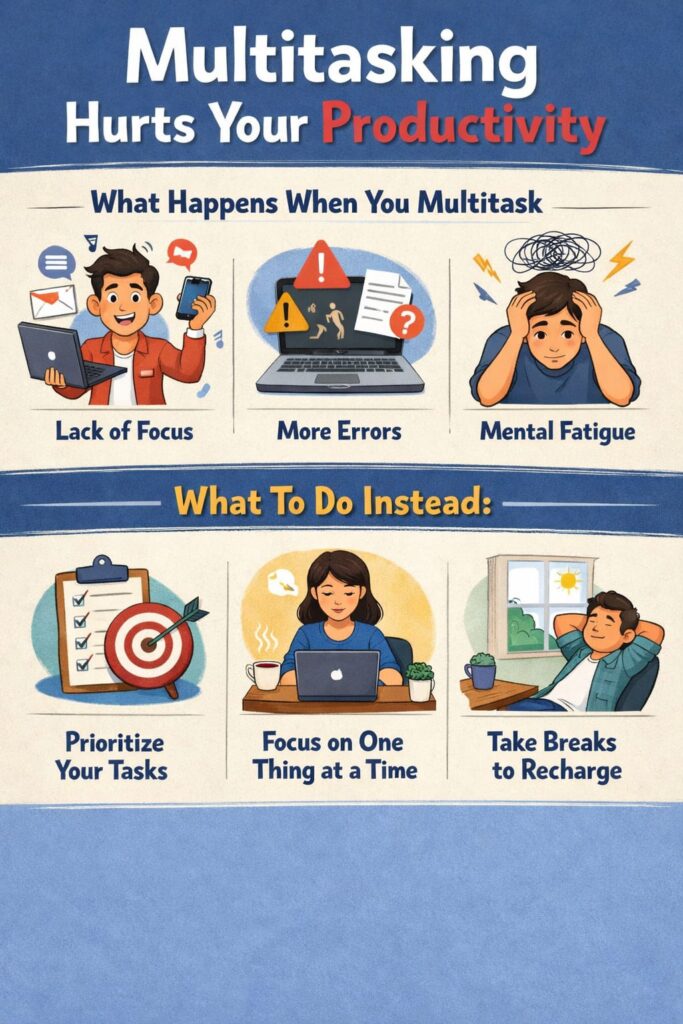
Multitasking doesn’t boost your efficiency — it just leaves you feeling drained. When you slow down and concentrate on one task at a time, you : work more effectively, finish tasks quicker, feel more at ease, produce higher-quality outcomes in our noisy digital landscape.
Honing your focus is a skill that’s truly worth safeguarding.